
Do External Car Sun Visors Actually Work in the Australian Climate? Here’s What You Need to Know
Do External Car Sun Visors Actually Work in the Australian Climate?
Australia is known for some of the harshest driving conditions in the world. From the blazing UV levels of Queensland summers to the dry inland heat of the Outback, Australian drivers constantly battle sunlight, glare, and extreme cabin temperatures.
That raises an important question:
Do external car sun visors actually work, or are they just a styling accessory?
The short answer is yes — quality external sun visors can make a noticeable difference in the Australian climate. They help reduce glare, improve driving comfort, lower heat buildup, and protect vehicle interiors from long-term UV damage.
In this article, we’ll break down exactly how external car sun visors work, why they’re popular in Australia, and whether they’re worth installing on your vehicle.
Why Australia Is Tough on Vehicles; external car sun visors
Australia has one of the highest UV exposure levels in the world. According to the Cancer Council Australia, prolonged UV exposure can damage both skin and vehicle interiors over time. Vehicle side windows may still allow significant UVA transmission depending on the glass type. (Cancer Council Australia)
Australian conditions create several problems for drivers:
- Intense windshield glare
- Extremely hot cabin temperatures
- Dashboard fading and cracking
- Driver eye strain
- Reduced visibility during sunrise and sunset
- Increased air conditioning usage
Cars parked in direct sunlight can quickly exceed dangerous interior temperatures because of the greenhouse effect caused by sunlight entering through glass. (Click Shades)
This is where external sun visors become useful.
What Is an External Car Sun Visor?
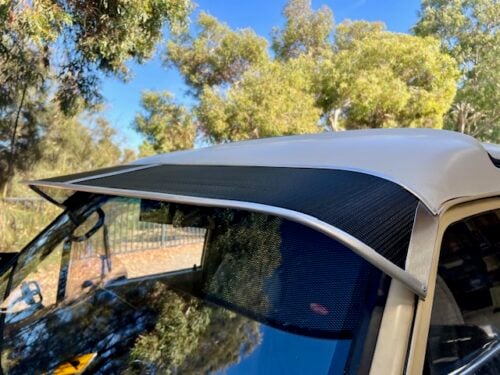
An external car sun visor is a visor mounted above the windshield on the outside of the vehicle.
They are especially common on:
- Trucks
- 4WDs
- Utes
- Commercial vehicles
- Off-road builds
Popular Australian vehicles that commonly use external visors include:
- Toyota Hilux external car sun visors
- Ford Ranger
- Isuzu D-Max external car sun visors
- Nissan Navara external car sun visors
- Land Cruiser models external car sun visors
- external car sun visors external car sun visors
External visors are designed to:
- block direct sunlight before it reaches the windshield
- reduce glare
- shade the upper windshield area
- improve visibility in bright conditions
Unlike internal windshield shades used while parked, external visors work while driving.
How External Sun Visors Work
External sun visors function by reducing the amount of direct sunlight entering through the top section of the windshield.
The science is relatively simple:
- less direct solar radiation enters the cabin
- less glare reaches the driver’s eyes
- some heat is prevented from entering the interior
Vehicle cabins heat rapidly because sunlight passes through glass and becomes trapped as heat energy. (Shevron Auto Accessories)
By shading part of the windshield externally, the visor helps reduce:
- solar heat gain
- direct UV exposure
- visual discomfort
This becomes particularly useful in Australian driving conditions where the sun angle can be extremely aggressive during morning and afternoon driving.
Benefits of External Sun Visors in Australia
1. Reduced Sun Glare
This is the biggest benefit.
Australian roads often involve:
- long highway driving
- open rural roads
- strong low-angle sunlight
External visors help block harsh overhead glare, especially:
- during sunrise
- during sunset
- in summer afternoons
Drivers often experience less eye fatigue and better visibility.
2. Cooler Cabin Temperatures
External visors alone will not turn your car into an air-conditioned fridge, but they can help reduce heat entering through the windshield.
Studies and automotive testing consistently show that reducing direct sunlight lowers cabin heat buildup. (Click Shades)
Combined with:
- quality window tint
- reflective windshield shades
- proper ventilation
…external visors contribute to a cooler interior.
3. Interior Protection
Australian UV exposure is brutal on:
- dashboards
- steering wheels
- leather seats
- plastics
- electronics
Over time, excessive sunlight can cause:
- fading
- cracking
- discoloration
- warping
Research shows significant UVA exposure can still occur inside vehicles depending on the glass type and tinting used. (Cancer Council Australia)
External visors help reduce direct sunlight hitting interior surfaces repeatedly over long periods.
4. Improved Driving Comfort
Long-distance Australian drivers often spend hours under direct sunlight.
A properly fitted visor can:
- reduce squinting
- lower eye fatigue
- improve comfort on highway drives
- make off-road driving easier in bright terrain
This is one reason visors remain popular in:
- trucking
- mining
- rural work vehicles
- touring builds
5. Off-Road and Touring Appeal
In Australia, external visors are also part of 4WD culture.
They’re popular on:
- touring rigs
- lifted utes
- expedition vehicles
- overlanding setups
Many drivers like the rugged appearance alongside the practical benefits.
Do External Visors Reduce UV Exposure?
Partially — yes.
They reduce direct sunlight exposure through the windshield area they shade.
However, it’s important to understand:
- side windows may still transmit UVA radiation
- visors are not a replacement for tint or sunscreen
- overall protection depends on visor size and angle
The Australian Radiation Protection and Nuclear Safety Agency notes that some automotive glass still allows substantial UVA transmission. (ARPANSA)
That’s why many Australian drivers combine:
- external visors
- UV tint
- sunglasses
- windshield shades
for maximum protection.
Are External Visors Worth It?
For many Australian drivers, yes.
They are especially worthwhile if you:
- drive long highway distances
- own a 4WD or ute
- frequently park outdoors
- live in high-UV regions
- travel off-road
- tow caravans or trailers
The benefits are most noticeable in:
- Queensland
- Northern Territory
- Western Australia
- regional inland areas
When External Sun Visors May Not Help Much
They are less useful if:
- you mainly drive in urban underground parking environments
- your vehicle already has advanced UV glass
- you rarely drive in bright daylight
- aesthetics matter more than practicality
Cheap low-quality visors can also:
- create wind noise
- vibrate at highway speeds
- reduce visibility if poorly designed
Quality and proper installation matter.
External Visor vs Window Tint
The best setup is usually combining both.
| Feature | External Sun Visor | Window Tint |
|---|---|---|
| Reduces glare | Excellent | Moderate |
| Reduces cabin heat | Moderate | Good |
| Blocks UV | Partial | Excellent |
| Works while driving | Yes | Yes |
| Changes vehicle appearance | Yes | Minimal |
| Helps during sunrise/sunset | Excellent | Limited |
Together, they provide significantly better comfort for Australian driving conditions.
Final Verdict
External car sun visors absolutely do work in the Australian climate — especially for drivers dealing with intense sunlight, long-distance travel, and high UV exposure.
They are most effective for:
- reducing glare
- improving visibility
- lowering direct heat exposure
- protecting interiors over time
While they are not a complete solution on their own, combining an external visor with quality tint and proper UV protection can dramatically improve driving comfort in Australia’s harsh conditions.
For ute owners, truck drivers, touring enthusiasts, and anyone regularly driving under the Australian sun, an external visor is often both a practical upgrade and a styling enhancement.